
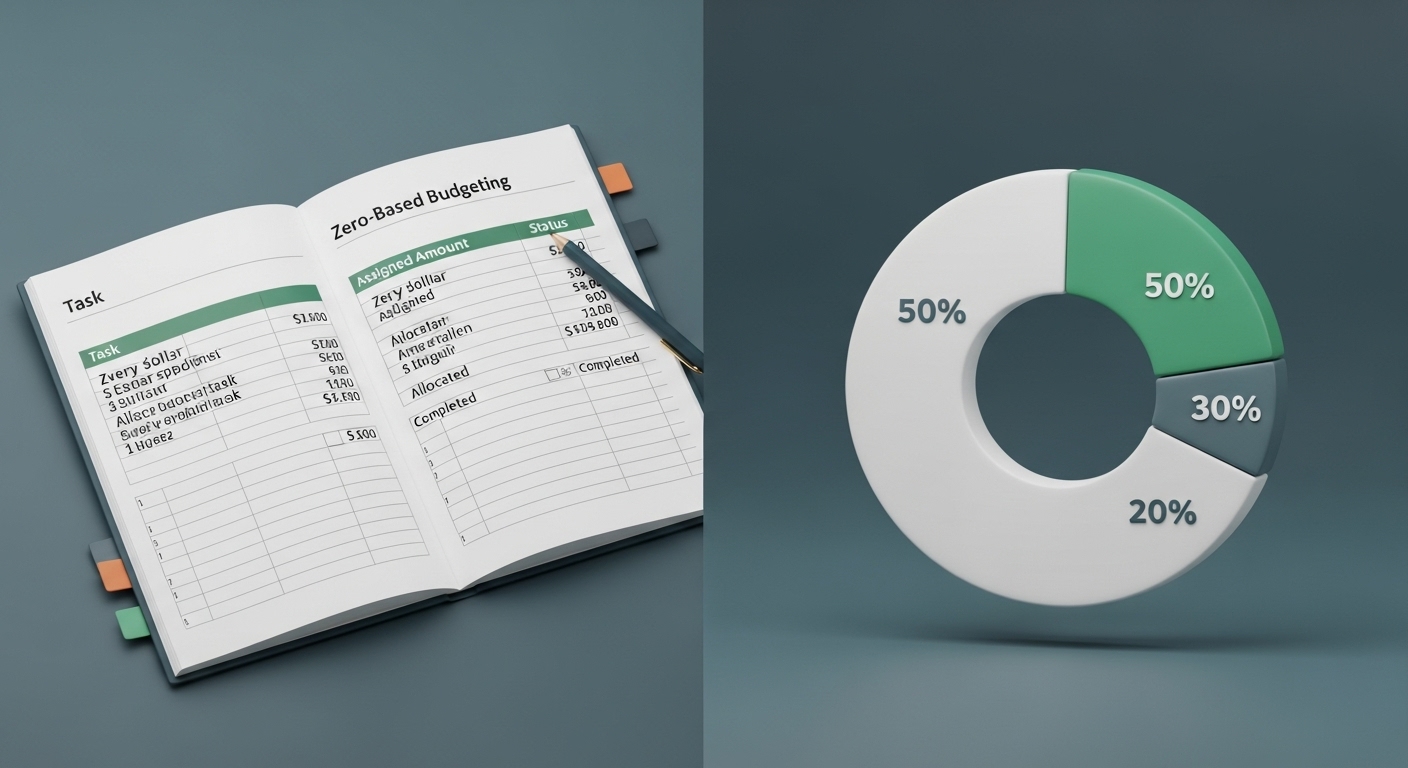
Framework Overview: The Math vs. The Mindset
Before we crown a winner, we must understand the mechanics of each strategy. One is an intensive tracking system, while the other is a broad-strokes guideline.
| Feature | 50/30/20 Rule | Zero-Based Budgeting |
|---|---|---|
| Complexity | Low (Beginner Friendly) | High (Detailed Tracking) |
| Flexibility | High | Low (Rigid but Effective) |
| Primary Goal | Balance & Simplicity | Efficiency & Intentionality |
| Ideal For | Consistent Salary Earners | High-Debt or Aggressive Savers |
The 50/30/20 Rule: The Balanced Blueprint
Popularized by Senator Elizabeth Warren, this rule splits your after-tax income into three distinct buckets:
- 50% Needs: Housing, utilities, groceries, and minimum debt payments.
- 30% Wants: Dining out, subscriptions, travel, and hobbies.
- 20% Savings & Debt: Emergency funds, 401(k) contributions, and debt principal.
Zero-Based Budgeting: Give Every Dollar a Job
With Zero-Based Budgeting, your Income minus Expenses equals Zero. This doesn't mean you have no money in your bank account; it means that every single dollar has a mission. If you have $100 left at the end of the month, you must assign it to a "job," such as "Holiday Fund" or "Extra Car Payment."
Which Method Wins for You?
The "winner" depends entirely on your current financial season:
- Choose 50/30/20 if: You are just starting out, find tracking every cent overwhelming, or have a stable financial situation where you naturally save some money.
- Choose Zero-Based if: You are aggressive about debt repayment (using the Debt Snowball), have an irregular income (like freelancing), or feel like your money is "disappearing" without knowing why.
2026 Pro-Tip: The Hybrid Approach
Many successful wealth-builders in 2026 use a **Hybrid Budget**. They use the 50/30/20 rule to set their high-level goals and then use Zero-Based Budgeting within the "Wants" and "Savings" buckets to ensure no money is wasted.
Ready to take control?
Use our professional-grade tools to visualize your strategy and speed up your progress.
Build Your Custom Budget