
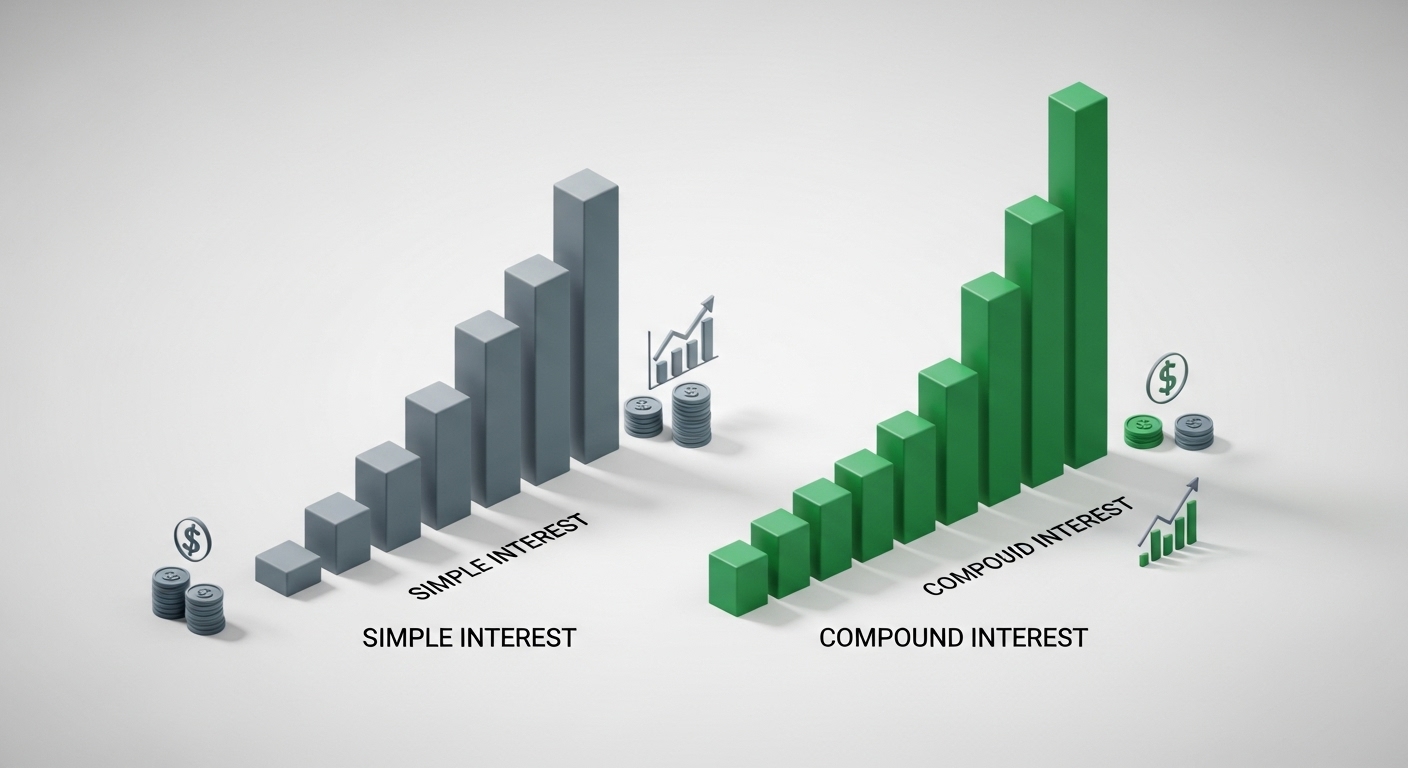
Simple vs. Compound Interest: The Core Difference
The distinction between these two mathematical models is the difference between working for your money and having your money work for you.
| Feature | Simple Interest | Compound Interest |
|---|---|---|
| Calculation Base | Principal only | Principal + Accumulated Interest |
| Growth Pattern | Linear (Steady) | Exponential (Accelerating) |
| Common Uses | Short-term loans, car loans | Savings accounts, 401(k), ETFs |
The "Waiting Tax": Why Early Starters Win
In the world of finance, time is a multiplier. Consider two investors, Alex and Sam, both earning a 7% annual return:
- Alex starts at age 25, invests $500/month for 10 years, then stops entirely.
- Sam starts at age 35, invests $500/month for 30 years until age 65.
Despite Sam investing three times more money than Alex, Alex ends up with a larger nest egg at retirement. Why? Because Alex gave the initial "snowball" an extra decade to gain momentum.
Three Levers of Compounding
To maximize the ROI of your wealth-building journey, you must manipulate these three variables:
1. Frequency
The more often interest is calculated (daily vs. annually), the faster your balance grows.
2. Rate of Return
Even a 1% difference in annual yield can result in six-figure differences over 30 years.
3. Time Horizon
The most powerful lever. Adding 5 years to your timeline is more effective than doubling your monthly contribution.
Final Verdict: Start Today
The best time to start compounding was twenty years ago. The second best time is today. Whether you are using a High-Yield Savings Account or a Brokerage Account, the math remains the same: time is the engine, money is just the fuel.
Ready to take control?
Use our professional-grade tools to visualize your strategy and speed up your progress.
Calculate Your Growth Potential